2026-11-23 · Carlos Ramirez
What Owner-Operators & Fleets in the Inland Empire Need to Know About CARB Clean Truck Check Compliance
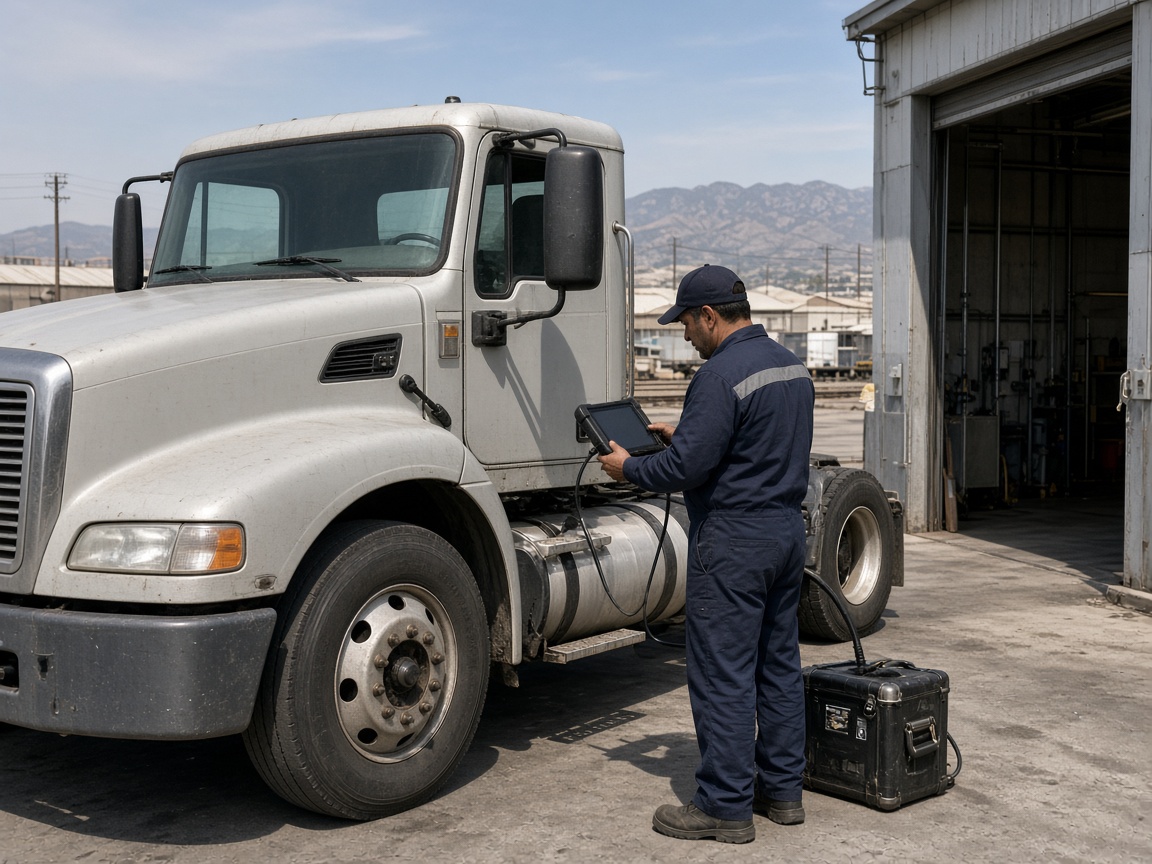
Owner-operators and fleets in the Inland Empire keep trucks compliant with CARB Clean Truck Check rules by scheduling OBD testing and opacity inspections that match the region's hot-summer Mediterranean climate and heavy daily mileage on routes through San Bernardino County.
CARB Clean Truck Check Basics for Inland Empire Trucks
Trucks operating out of Ontario, Rancho Cucamonga, and Fontana must meet state emissions standards that focus on both electronic diagnostics and tailpipe opacity. The process starts with connecting to the vehicle's OBD system to read fault codes and verify aftertreatment performance. Next comes a visual check of the exhaust and a opacity test under load. Owner-operators who run routes past Ontario International Airport or through Guasti often see faster soot buildup because summer temperatures push engines harder and increase idle time at warehouses. Fleets that skip these checks risk out-of-service orders during random roadside inspections on I-10 or I-15. Mobile Clean Truck Check — OBD Testing covers the electronic side while Diesel Opacity & Visual Inspection handles the physical verification.
How Ontario Summers Change Emissions Testing Outcomes
Hot-summer Mediterranean weather in Ontario brings daytime highs that regularly stress diesel aftertreatment systems. When temperatures climb, DPFs load faster and EGR coolers work harder, which can trigger fault codes during OBD scans. Mild winters give little relief because trucks still accumulate miles on routes through Creekside and Ontario Ranch. Fleets based near 520 S Cypress Ave report that vehicles idling at the airport or Toyota Arena show higher opacity readings in August than in February. Technicians adjust test timing to avoid peak heat so readings reflect true operating condition rather than heat-related spikes. This seasonal pattern means owner-operators schedule checks before summer peaks to avoid repeat visits.
Common Compliance Issues for Fleets in San Bernardino County
Many trucks serving Downtown Ontario, Armstrong, and North Ontario carry 8-to-12-year-old engines that still rely on older sensor sets. These units often flag during OBD testing because wiring harnesses degrade from constant vibration on local roads. Visual inspections catch cracked boots and loose clamps that let unfiltered exhaust reach the opacity meter. Fleets running between Upland, San Bernardino, and Fontana see extra wear on turbo actuators from the daily stop-and-go around Ontario Mills. Addressing these items before the test prevents failed inspections and keeps trucks on the road during peak shipping months.
Scheduling and Location Advantages in Ontario
Owner-operators gain time by using a station at 520 S Cypress Ave that operates Monday through Friday 7:00 AM to 6:00 PM and Saturday 8:00 AM to 3:00 PM. This schedule fits drivers who finish routes through Cucamonga-Guasti Regional Park or Museum of History and Art before heading home. Mobile service reaches trucks parked at yards in Ontario Ranch without pulling them off the road during weekday hours. Ontario fleets reduce downtime by combining the Clean Truck Check with routine safety items at the same stop. The result is fewer missed deliveries and clearer records when CARB auditors review fleet files.